


BEST DARN
NEWSLETTER, PERIOD!
Practical Insights for Real-Time Automation
4th Quarter 2026 • Issue 82

Inside This Issue
Technical deep dive
“Machine Historian or Server Historian?” You’re Asking the Wrong Question
John’s corner
Scotland: History, Whiskey and Politics
A column of personal opinion by John S. Rinaldi, founder and owner of Real Time Automation
I recently returned from a long visit to Scotland. And yes, I learned to drink whiskey! Tasting 1, 3, 12 and 15-year-old whiskey was a significant revelation for me. I learned why Scots savor a “wee dram”.
Of course, whenever I visit a place, I must learn its history and Scotland was no exception. And this is a place with a lot of history. Frankly, all I knew about Scotland prior to this trip was from the movies Rob Roy and Braveheart. I learned that Scotland is really old, originally settled almost 10,000 years ago. It’s been home to a people called the Picts. It’s been invaded by the Vikings, the Romans and the English and in 1707 became formally part of Great Britain.
In the far north Orkney Islands, we visited a remarkably well-preserved, five-thousand-year-old village. If you remember Fred and Wilma’s home from the Flintstones cartoons, you can imagine exactly what these homes look like. There are stone beds, stone dressers, stone storage shelving and a small privy with outside drainage. In the center was the fire – a fire that provided both ongoing warmth and smoke for the meat that would have been hanging from the ceiling.

John S. Rinaldi
President
This village was inhabited by about 70 to 100 residents. Archaeologists know much about these people from their refuse: antlers, skins, broken tools, bones. That garbage was used as insulation in their walls. This village is so well preserved because it was abandoned and nature concealed it for almost 2,000 years. Nearly every settlement of that era was continually occupied, remodeled and rebuilt. This village wasn’t. Why? Archaeologists have no answer. Did it just die out? Were they attacked by Vikings or another village? Did a changing climate and rising ocean waters force them to find a more suitable place to live? It’s unlikely we will ever know.
Another mystery is the standing stones from people of a later period (only two thousand years ago). Throughout Scotland, for hundreds of years, people have discovered these large stones, ranging from 5 feet to 25 feet high and weighing more than one ton. In certain places, up to 60 of these stones are found in a circle surrounded by a large ditch. It’s estimated that 100,000 hours were spent digging the encircling trench. Are they religious symbols? Why are they sometimes scattered about but also found grouped in a single location?
We were driven around Scotland by a native Scottish guide who had as small an impression of America as I did of Scotland. She seemed to believe that Americans normally carry guns to church and have shootouts in grocery stores. For my part, I couldn’t understand a land with no ability for its people to influence its destiny. Scotland’s parliament has little to no power and is completely unable to reject any rule or law imposed by the English.
With many Americans having Scottish heritage, it is a place I encourage you to visit.
New from RTA
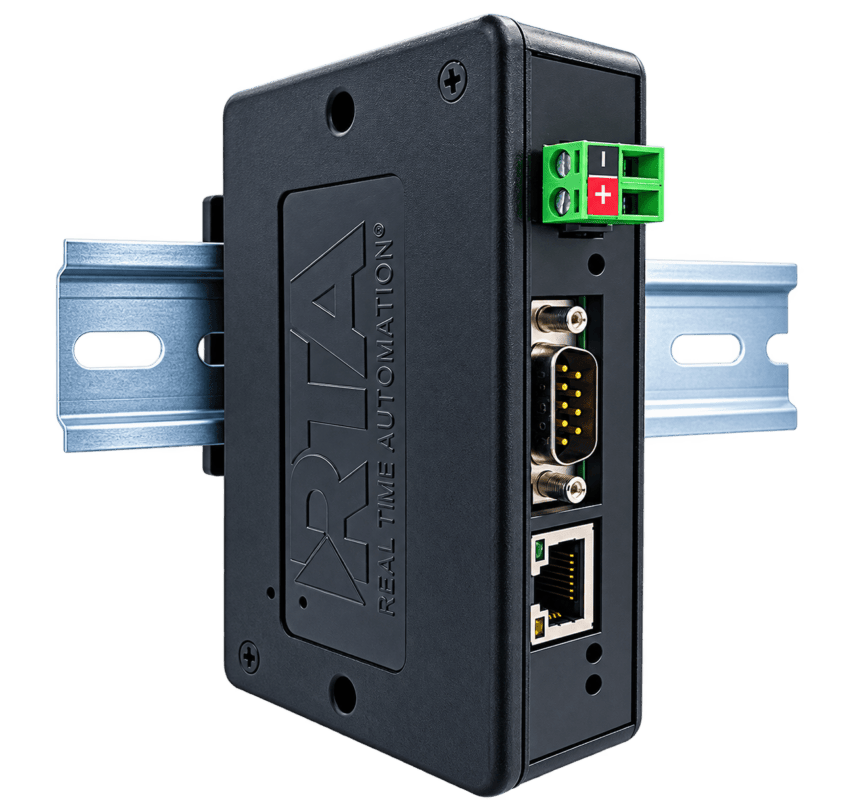
Meet the 435NBX-S2E
A purpose-built ASCII-to-Allen-Bradley PLC gateway with a single serial port and Ethernet port.
- ✓Micro800 Support – Works with Micro820, Micro850 and Micro870 PLCs
- ✓Automatic PLC Discovery – Quickly find and connect to your PLC
- ✓Cost-Effective Design – A small footprint design with only the ports you need
- ✓Single-Device Focus – A right-sized gateway built for single-device serial connections
Technical Deep Dive
“Machine Historian or Server Historian?” You’re Asking the Wrong Question
By John S. Rinaldi
I build historians and edge gateways for a living, so trust me on this one: the “machine-level vs. software historian” debate is a waste of good coffee. I’ve watched sharp engineers turn it into a cage match and nobody ever climbs out the winner.
Here’s why. These two things aren’t rivals. They do completely different jobs.
One grabs the unfiltered truth right at the machine, the instant it happens. The other stitches together the plant-wide story your business actually runs on. Pick one based on which one you like instead of which job you need done, and you don’t just make a mediocre choice; you buy yourself a blind spot, dead-end troubleshooting, orphaned islands of data and the scariest one of all: total confidence in records that are quietly full of holes.
So, let’s stop guessing.
The Machine-level Historian: The Black Box Recorder
A machine-level historian is a hardened, DIN-rail device wired straight into your control network, usually running something rugged like Linux. It sits on the same Ethernet switch as your machine and slurps up high-volume, event-triggered, time-series data right at the source.
The good part? It reaches into places other tools can’t. It reads PLC data tables directly. Some models pull from EtherNet/IP or PROFINET I/O networks, or interrogate Modbus and SNMP devices for link failures and status. That’s data the server historian upstream often never sees.
Where does it shine?
- Diagnostics. It watches specific tags, and when something trips, it captures the detailed machine data your controls engineer needs to figure out what actually happened. Great for Sequence-of-Event work when equipment shuts down for no obvious reason.
- Track and trace. Verifying a product’s journey through the process for pharma, food (recalls), packaging and logistics.
- Process audits. Proving a step ran to spec. Did that part really bake and cool at the right temperatures for the right time? Now you can show it.
The catch: it’s a specialist, not the corporate source of truth. It covers one machine, not the whole plant. Storage is finite, though with up to a terabyte per machine (such as on the RTA Historian), you can realistically keep cradle-to-grave records for that box. And its dashboards and reports, while handy, aren’t as slick as what server historians offer. (The upside: it hands data off cleanly to external analytics tools.)
Security? It varies. Older ones weren’t built with cyber in mind. Newer ones increasingly follow the IEC 62443-4-1 standard, secure browsers and encrypted databases. Ask before you buy.
The Software Historian: The Storyteller
A software historian is a server-based application that collects the same time-series data, but from many machines at once. It also ingests relational data from your ERP and MES systems, so it doesn’t just record numbers; it adds context.
This is your reporting powerhouse: rich trending, charting, cross-asset analysis, long retention, predictive maintenance and audit compliance. When management wants a dashboard covering three lines across two sites, this is the tool.
Its weaknesses live in the plumbing. A software historian depends on servers and network paths. A reboot, a hiccup, a switch failure between the source and the server, and data gets delayed or vanishes. And because these run on Windows or Linux servers, they need patches, updates and maintenance. Unscheduled downtime during a process audit can quietly eat records you legally needed to keep. On top of that, the server usually lives outside the process zone, so data crosses multiple switches before it’s stamped, which chips away at timestamp accuracy and can skew whatever your analytics conclude.
Security-wise, it benefits from mature, centralized IT controls, but it’s connected to a lot more, so the attack surface is bigger. Again: verify IEC 62443-4-1.
“So which one wins?”
Neither. Still the wrong question.
The strongest setups often run both. The machine-level historian captures accurate, properly timestamped and complete records right at the source, even when the network’s having a bad day. Then the software historian archives those records and blends them with ERP and MES data to build the full picture. Local depth plus enterprise breadth.
| Digital transformation | |
|---|---|
| Is fully underway at my plant | 44% |
| Is under consideration | 46% |
| Isn’t a thought | 10% |
| Is a crock | 0% |
| Data Models | |
|---|---|
| Are buried in the PLC | 34% |
| Are department specific | 34% |
| Are global through the organization | 16% |
| What is a data model? | 16% |
| OT, IT and security | |
|---|---|
| Work together seamlessly | 11% |
| Cooperate when they have to | 76% |
| Don’t understand each other | 10% |
| Hate each other | 3% |
| Metadata | |
|---|---|
| All PLC data get metadata attached to it | 23% |
| We don’t attach any metadata to data values | 56% |
| What is metadata? | 21% |
| My job | |
|---|---|
| Uses time-series data | 14% |
| Uses relational data | 14% |
| Uses both time-series and relational data | 52% |
| Is so easy I can’t believe I get paid for it | 20% |
| The best choice at the ballpark is | |
|---|---|
| Bratwurst with chips | 7% |
| Bratwurst with french fries | 27% |
| Bratwurst with cheese curds | 30% |
| Always go with the italian sausage! | 36% |
|
|
 |
|
|
Complete our quick survey by November 15, 2026 and we’ll send you a custom RTA car trash bag. Because your vehicle deserves better than mystery receipts, granola bar wrappers and that one straw wrapper that has been living in the cup holder since June. Take the survey by 11/15/26 at rtautomation.com/steal. |
Your quick picking guide
Ask yourself one of three questions:
- “How do I catch what really happened on this machine?” Start with the machine-level historian. It’s your best bet for local evidence, troubleshooting, traceability, and audit-grade capture close to the source.
- “How do I give the plant a shared, scalable history and reporting layer?” Use the software historian. That’s exactly what it’s built for.
- “How do I avoid choosing at all?” → Use both. Capture locally first, then sync or archive upward.
A few tiebreakers: if network or server outages can’t be allowed to lose data, lean machine-level. If timestamp precision matters, lean machine-level. If you need dashboards, cross-site analytics, and business consumption of your data, lean to software. If losing machine detail is unacceptable and leadership wants enterprise analysis, regulated, high-uptime, multi-site, then run both and stop apologizing for the complexity. It pays off.
(Quick aside: people often ask if an edge gateway is a historian. The answer is no. A gateway collects and forwards. It usually doesn’t retain. A historian is built to keep the record so you can pull it back later.)
Bottom line
Stop asking which historian wins. Ask what the job is that needs doing, and let the architecture follow. Get it right and your data stops being a collection of blind spots and orphaned islands. It becomes something you can actually trust when it counts.
CHANNEL CONNECTIONS
How RTA Supports Every Step of the Connectivity Journey
By Roy Kok
Connectivity problems are rarely the main event on a project, but they can stall larger work, force expensive workarounds or leave a system incomplete. Real Time Automation’s protocol gateways and related products are designed to close those gaps quickly and cost-effectively. More importantly, the way we work with distributors, OEMs, system integrators and end users is built so the person who ultimately has to make the system run gets a reliable product, fast availability and direct expert support, no matter how the order is placed.
End Users
End users are the constant in every transaction. Hundreds of them contact us each year for a module that solves a specific connectivity challenge, such as adding a remote barcode reader to a PLC with minimal code changes, linking a legacy serial device into a modern network or bridging EtherNet/IP and BACnet so a larger automation package can communicate with a data center cooling system or DCIM platform.

Roy Kok
VP of Sales & Marketing
Whether the order comes direct, through a distributor or as part of a system integrator project, the support model is the same. Call during business hours and speak with a live Enginerd. There are no support fees, no subscription requirements and no need to route the question back through a channel.
RTA products carry no licenses or ongoing subscriptions, ship from stock with same-day shipping available and are backed by a five-year warranty. Browser-based configuration is designed for fast time-to-first-packet, and when the mapping is repetitive or complex we can supply custom device templates or pre-loaded configurations so the unit arrives closer to ready.
The goal is straightforward: get the data moving so the rest of the project or the plant can proceed, without adding recurring cost or support friction.
Distributors
Most individual gateway orders are modest in size. After discounts the margin on a single unit is limited, so pure one-off opportunities are not always the focus of dedicated sales calls. In these cases, the gateway is typically the special glue that solves a connectivity or architectural problem, and distributors are well positioned to fulfill them cleanly. RTA keeps that process straightforward. Products are in stock, configurations are well documented and end users (or the distributor) can reach Enginerd support directly if questions arise.
There is a second, higher-value opportunity. RTA products frequently serve as enabling technology that completes a larger distributor solution. A common example is connecting a high-value variable-speed drive package to a data center cooling system (EtherNet/IP to BACnet for DCIM connectivity). Without the gateway the major sale may not happen. When it does, the end user receives a complete, supported system rather than a gap that has to be solved later.
OEMs
OEMs are a distinct and important category. We work with some directly and also have models that allow distributors to participate. Gateways are frequently brand-labeled and supplied to OEMs so their equipment ships with broader connectivity. Volumes can reach hundreds of modules per year.
RTA is particularly strong at customization. Gateways support import and export of configurations. In addition to special packaging, we frequently develop custom configurations (including device templates) or custom protocol support, then create unique part numbers for the distributor and their OEM customer. Units ship pre-loaded so the OEM’s customer, whether an end user or system integrator, receives maximum out-of-box value and reduced engineering time. Examples of OEMs we support include manufacturers of industrial printers, power generators, industrial displays, water treatment systems and others.
System Integrators
System integrators are the people charged with making everything work. Until now we have not had a dedicated program to support them. We are currently launching an RTA Authorized System Integrator program.
The program is not intended to move business away from distribution. We prefer that system integrators continue to work through our distributor channel so they receive support for RTA products as well as the other products that make up a complete solution. That approach benefits the end user by keeping the full project under partners who can support the entire scope.
The program focuses on six benefits:
- Getting found: listing in an RTA System Integrator directory so customers can locate capable partners.
- Getting connected: introductions to our distributor partners.
- Getting RTA resources: access to support and technical information through a new SI Portal.
- Staying informed: regular updates on RTA news and product developments.
- Leveraging RTA as a marketing partner: jointly creating and promoting success stories.
- Demonstrating expertise: the ability to display the Authorized System Integrator badge.
System integrators can begin the authorization process on our website: https://www.rtautomation.com/system-integrator-sign-up/
The Same Support Behind Every Channel
No matter how an RTA product is purchased (direct, through a distributor, as part of an OEM solution or via a system integrator), the underlying commitment stays the same. Products are cost-effective and free of ongoing licenses or subscriptions. They ship from stock, carry a five-year warranty and are backed by direct access to Enginerds who know the protocols and the hardware. Custom configurations and unique part numbers are available when they reduce engineering effort for the people who have to install and maintain the system.
That combination is how we try to be sensitive to every customer type while keeping the end user, the person who needs the connectivity problem solved, front and center.

View Our Past Newsletters
- Issue #81 - Quarter 3 2026
- Issue #80 - Quarter 2 2026
- Issue #79 - Quarter 1 2026
- Issue #78 - Quarter 3 2025
- Issue #77 - Quarter 2 2025
- Issue #76 - Quarter 1 2025
- Issue #75 - Quarter 4 2024
- Issue #74 - Quarter 3 2024
- Issue #73 - Quarter 2 2024
- Issue #72 - Quarter 1 2024
- Issue #71 - Quarter 4 2023
- Issue #70 - Quarter 3 2023
- Issue #69 - Quarter 2 2023
- Issue #68 - Quarter 1 2023
- Issue #67 - Quarter 4 2022
- Issue #66 - Quarter 3 2022
- Issue 65 - Quarter 2 2022
- Issue 64 - Quarter 1 2022
- Issue 63 - November 2021
- Issue 62 - September 2021
- Issue 61 - July 2021
- Issue 60 - May 2021
- Issue 59 - March 2021
- Issue 58 - January 2021
- Issue 57 - November 2020
- Issue 56 - September 2020
- Issue 55 - July 2020
- Issue 54 - May 2020
- Issue 53 - March 2020
- Issue 52 - January 2020
- Issue 51 - November 2019
- Issue 50 - September 2019
- Issue 49 - July 2019
- Issue 48 - May 2019
- Issue 47 - March 2019
- Issue 46 - January 2019
- Issue 45 - November 2018
- Issue 44 - September 2018
- Issue 43 - July 2018
- Issue 42 - May 2018
- Issue 41 - March 2018
- Issue 40 - January 2018
- Issue 39 - November 2017
- Issue 38 - September 2017
- Issue 37 - July 2017
- Issue 36 - May 2017
- Issue 35 - March 2017
- Issue 34 - January 2017
- Issue 33 - November 2016
- Issue 32 - September 2016
- Issue 31 - July 2016
- Issue 30 - May 2016
- Issue 29 - March 2016
- Issue 28 - January 2016
- Issue 27 - November 2015
- Issue 26 - September 2015
- Issue 25 - July 2015
- Issue 24 - May 2015
- Issue 23 - March 2015
- Issue 22 - January 2015
- Issue 21 - November 2014
- Issue 20 - September 2014
- Issue 19 - July 2014
- Issue 18 - May 2014
- Issue 17 - March 2014
- Issue 16 - January 2014
- Issue 15 - November 2013
- Issue 14 - September 2013
- Issue 13 - July 2013
- Issue 12 - May 2013
- Issue 11 - March 2013
- Issue 10 - January 2013
- Issue 9 - November 2012
- Issue 8 - September 2012
- Issue 7 - July 2012
- Issue 6 - May 2012
- Issue 5 - March 2012
- Issue 4 - January 2012
- Issue 3 - November 2011
- Issue 2 - September 2011
- Issue 1 - July 2011