

RTA's Blog
Manufacturing AI is Only as Smart as the Data It Can Reach
Jul
I’ve been around a long time, and I can tell you that manufacturing AI is really hard to do. But it’s not because the Large Language Model (LLM) is dumb. A lot of the time, it fails because the data is just plain missing.
For thirty-five years, my job has been the same: Move factory data from where it lives to where someone needs it. NASA engineers, amusement park operators, wastewater plants, tea companies. Different plants, different faces, same gap.
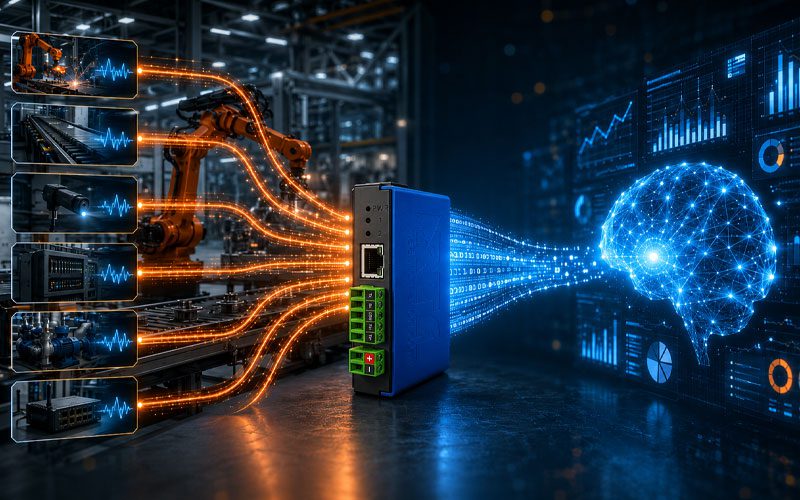
The analysis is as good as the data feeding it. Well-known secret: the data is almost never all there. Protocol gateways, such as those sold by RTA, help deliver the right machine- and device-level data to AI platforms.
How Did Manufacturing AI Change the Math On Protocol Gateways?
Traditional control architecture wants a narrow slice of the data pie. The PLC reads what the PLC needs and ignores the rest. An LLM is the opposite animal (more like me). It wants everything: Air pressure. Power draw. Ambient temperature and humidity. Chilled water temperature
It wants to know about the pneumatic system, the power controllers and every other subsystem that describe how the plant actually runs. That data lives outside the control architecture. Feed the model half the plant data and it will confidently hallucinate and tell you something incorrect about the whole plant.
Why Protocol Gateways Are Essential to AI-Driven Analysis
A protocol gateway reaches the equipment the controls engineer never bothered to wire into the PLC because the PLC did not care. The LLM cares, so now the protocol gateway matters again. With today’s extensive data requirements, a protocol gateway is how the right data reaches the model. Skip it, and your AI is guessing.
This is a reversal. For years, control architects treated protocol gateways as a tax — latency, complexity and expense — and engineered them out of the design wherever they could. They picked devices that sat natively inside the control architecture and avoided anything that smelled like a translator. That instinct made sense when the data requirements were small. It does not make sense when you are trying to feed an AI model that wants the whole picture.
Industry 4.0 lived on slides for a decade. The slides were never the problem. The problem was that the data underneath them was inconsistent, unformatted and half the time unavailable. AI does not fix that. AI exposes it.
RTA Protocol Gateways Power Manufacturing AI
Unlike traditional control architecture, LLMs need data from as many sources as possible. Your Manufacturing AI is only as smart as the data it can reach, and without complete data, you are missing the full picture.
Real Time Automation has been helping manufacturers move industrial data for over 30 years with simple, one-to-one protocol gateways that are easy to set up, fast to deploy and backed by live Enginerd support. Featuring over 450 configurations, our protocol gateways reliably move data between major automation networks, normalize it and build it into consistent data models.

